
4.9深入理解消息机制
目录介绍
- 01.消息机制三要素
- 02.Framework中消息队列
- 03.Native中的MQ源码
- 04.处理Native层MQ
- 05.Android消息机制设计
- 08.android_os_MessageQueue
02.Framework中消息队列
- Android 的Framework中的消息队列有两个:
- Java层
frameworks/base/core/java/android/os/MessageQueue.java - Native层
frameworks/base/core/jni/android_os_MessageQueue.cpp
- Java层
- Java层的MQ并不是
List或者Queue之类的 Jdk内的数据结构实现。- Native层的源码具体可以看android_os_MessageQueue
- 并不难理解:
用户空间会接收到来自内核空间的消息, 从下图我们可知,这部分消息先被Native层获知,所以: - 通过
Native层建立消息队列,它拥有消息队列的各种基本能力 - 利用
JNI打通Java层和Native层的Runtime屏障,在Java层映射出消息队列 - 应用建立在Java层之上,在Java层中实现消息的
分发和处理
03.Native中的MQ源码
- Native层消息队列的创建:
static jlong android_os_MessageQueue_nativeInit(JNIEnv* env, jclass clazz) { NativeMessageQueue* nativeMessageQueue = new NativeMessageQueue(); if (!nativeMessageQueue) { jniThrowRuntimeException(env, "Unable to allocate native queue"); return 0; } nativeMessageQueue->incStrong(env); return reinterpret_cast<jlong>(nativeMessageQueue); } - 很简单,创建一个Native层的消息队列,如果创建失败,抛异常信息,返回0,否则将指针转换为Java的long型值返回。
- 当然,会
被Java层的MQ所持有。NativeMessageQueue类的构造函数
NativeMessageQueue::NativeMessageQueue() : mPollEnv(NULL), mPollObj(NULL), mExceptionObj(NULL) { mLooper = Looper::getForThread(); if (mLooper == NULL) { mLooper = new Looper(false); Looper::setForThread(mLooper); } }- 这里的Looper是native层Looper,通过静态方法
Looper::getForThread()获取对象实例,如果未获取到,则创建实例,并通过静态方法设置。
- 当然,会
- 看一下Java层MQ中会使用到的native方法
class MessageQueue { private long mPtr; // used by native code private native static long nativeInit(); private native static void nativeDestroy(long ptr); private native void nativePollOnce(long ptr, int timeoutMillis); /*non-static for callbacks*/ private native static void nativeWake(long ptr); private native static boolean nativeIsPolling(long ptr); private native static void nativeSetFileDescriptorEvents(long ptr, int fd, int events); } - 对应签名:
static const JNINativeMethod gMessageQueueMethods[] = { /* name, signature, funcPtr */ { "nativeInit", "()J", (void*)android_os_MessageQueue_nativeInit }, { "nativeDestroy", "(J)V", (void*)android_os_MessageQueue_nativeDestroy }, { "nativePollOnce", "(JI)V", (void*)android_os_MessageQueue_nativePollOnce }, { "nativeWake", "(J)V", (void*)android_os_MessageQueue_nativeWake }, { "nativeIsPolling", "(J)Z", (void*)android_os_MessageQueue_nativeIsPolling }, { "nativeSetFileDescriptorEvents", "(JII)V", (void*)android_os_MessageQueue_nativeSetFileDescriptorEvents }, };mPtr是Native层MQ的内存地址在Java层的映射。
- Java层判断MQ是否还在工作:
private boolean isPollingLocked() {
    // If the loop is quitting then it must not be idling.
    // We can assume mPtr != 0 when mQuitting is false.
    return !mQuitting && nativeIsPolling(mPtr);
}
static jboolean android_os_MessageQueue_nativeIsPolling(JNIEnv* env, jclass clazz, jlong ptr) { NativeMessageQueue* nativeMessageQueue = reinterpret_cast<NativeMessageQueue*>(ptr); return nativeMessageQueue->getLooper()->isPolling(); }/** * Returns whether this looper's thread is currently polling for more work to do. * This is a good signal that the loop is still alive rather than being stuck * handling a callback. Note that this method is intrinsically racy, since the * state of the loop can change before you get the result back. */ bool isPolling() const;
04.处理Native层MQ
- 唤醒Native层MQ,代码如下所示
static void android_os_MessageQueue_nativeWake(JNIEnv* env, jclass clazz, jlong ptr) { NativeMessageQueue* nativeMessageQueue = reinterpret_cast<NativeMessageQueue*>(ptr); nativeMessageQueue->wake(); } void NativeMessageQueue::wake() { mLooper->wake(); } - Native层Poll:
static void android_os_MessageQueue_nativePollOnce(JNIEnv* env, jobject obj, jlong ptr, jint timeoutMillis) { NativeMessageQueue* nativeMessageQueue = reinterpret_cast<NativeMessageQueue*>(ptr); nativeMessageQueue->pollOnce(env, obj, timeoutMillis); } void NativeMessageQueue::pollOnce(JNIEnv* env, jobject pollObj, int timeoutMillis) { mPollEnv = env; mPollObj = pollObj; mLooper->pollOnce(timeoutMillis); mPollObj = NULL; mPollEnv = NULL; if (mExceptionObj) { env->Throw(mExceptionObj); env->DeleteLocalRef(mExceptionObj); mExceptionObj = NULL; } } - 先大概看下 Native层的Looper是
如何分发消息的//Looper.h int pollOnce(int timeoutMillis, int* outFd, int* outEvents, void** outData); inline int pollOnce(int timeoutMillis) { return pollOnce(timeoutMillis, NULL, NULL, NULL); } //实现 int Looper::pollOnce(int timeoutMillis, int* outFd, int* outEvents, void** outData) { int result = 0; for (;;) { while (mResponseIndex < mResponses.size()) { const Response& response = mResponses.itemAt(mResponseIndex++); int ident = response.request.ident; if (ident >= 0) { int fd = response.request.fd; int events = response.events; void* data = response.request.data; #if DEBUG_POLL_AND_WAKE ALOGD("%p ~ pollOnce - returning signalled identifier %d: " "fd=%d, events=0x%x, data=%p", this, ident, fd, events, data); #endif if (outFd != NULL) *outFd = fd; if (outEvents != NULL) *outEvents = events; if (outData != NULL) *outData = data; return ident; } } if (result != 0) { #if DEBUG_POLL_AND_WAKE ALOGD("%p ~ pollOnce - returning result %d", this, result); #endif if (outFd != NULL) *outFd = 0; if (outEvents != NULL) *outEvents = 0; if (outData != NULL) *outData = NULL; return result; } result = pollInner(timeoutMillis); } } - 先处理Native层滞留的Response,然后调用pollInner。
- 先于此处细节分析,我们知道,调用一个方法,这是
阻塞的,用大白话描述即在方法返回前,调用者在等待。
- 先于此处细节分析,我们知道,调用一个方法,这是
- Java层调动
native void nativePollOnce(long ptr, int timeoutMillis);过程中是阻塞的。
在看之前,我们先单纯从 TDD的角度 思考下,有哪些 主要场景 :当然,这些场景不一定都合乎Android现有的设计
- 消息队列是否在工作中
- 工作中,期望返回消息
- 不工作,期望返回null
- 工作中的消息队列
当前是否有消息- 不存在消息,阻塞 or 返回null?-- 如果返回null,则在外部需要需要
保持空转或者唤醒机制,以支持正常运作。从封装角度出发,应当保持空转,自己解决问题 - 存在消息
- 特殊的
内部功能性消息,期望MQ内部自行处理 - 已经到处理时间的消息, 返回消息
- 未到处理时间,如果都是排过序的,期望
空转保持阻塞or返回静默并设置唤醒? 按照前面的讨论,是期望保持空转
- 特殊的
- 不存在消息,阻塞 or 返回null?-- 如果返回null,则在外部需要需要
class MessageQueue {
    Message next() {
        // Return here if the message loop has already quit and been disposed.
        // This can happen if the application tries to restart a looper after quit
        // which is not supported.
        // 1. 如果 native消息队列指针映射已经为0,即虚引用,说明消息队列已经退出,没有消息了。
        // 则返回 null
        final long ptr = mPtr;
        if (ptr == 0) {
            return null;
        }

        int pendingIdleHandlerCount = -1; // -1 only during first iteration
        int nextPollTimeoutMillis = 0;

        // 2. 死循环,当为获取到需要 `分发处理` 的消息时,保持空转
        for (;;) {
            if (nextPollTimeoutMillis != 0) {
                Binder.flushPendingCommands();
            }

            // 3. 调用native层方法,poll message,注意,消息还存在于native层
            nativePollOnce(ptr, nextPollTimeoutMillis);

            synchronized (this) {
                // Try to retrieve the next message.  Return if found.
                final long now = SystemClock.uptimeMillis();
                Message prevMsg = null;
                Message msg = mMessages;

                //4. 如果发现 barrier ,即同步屏障,则寻找队列中的下一个可能存在的异步消息
                if (msg != null && msg.target == null) {
                    // Stalled by a barrier.  Find the next asynchronous message in the queue.
                    do {
                        prevMsg = msg;
                        msg = msg.next;
                    } while (msg != null && !msg.isAsynchronous());
                }

                if (msg != null) {
                    // 5. 发现了消息,
                    // 如果是还没有到约定时间的消息,则设置一个 `下次唤醒` 的最大时间差
                    // 否则 `维护单链表信息` 并返回消息

                    if (now < msg.when) {
                        // Next message is not ready.  Set a timeout to wake up when it is ready.
                        nextPollTimeoutMillis = (int) Math.min(msg.when - now, Integer.MAX_VALUE);
                    } else {
                        // 寻找到了 `到处理时间` 的消息。 `维护单链表信息` 并返回消息
                        // Got a message.
                        mBlocked = false;
                        if (prevMsg != null) {
                            prevMsg.next = msg.next;
                        } else {
                            mMessages = msg.next;
                        }
                        msg.next = null;
                        if (DEBUG) Log.v(TAG, "Returning message: " + msg);
                        msg.markInUse();
                        return msg;
                    }
                } else {
                    // No more messages.
                    nextPollTimeoutMillis = -1;
                }

                // 处理 是否需要 停止消息队列
                // Process the quit message now that all pending messages have been handled.
                if (mQuitting) {
                    dispose();
                    return null;
                }

                // 维护 接下来需要处理的 IDLEHandler 信息,
                // 如果没有 IDLEHandler,则直接进入下一轮消息获取环节
                // 否则处理 IDLEHandler
                // If first time idle, then get the number of idlers to run.
                // Idle handles only run if the queue is empty or if the first message
                // in the queue (possibly a barrier) is due to be handled in the future.
                if (pendingIdleHandlerCount < 0
                        && (mMessages == null || now < mMessages.when)) {
                    pendingIdleHandlerCount = mIdleHandlers.size();
                }
                if (pendingIdleHandlerCount <= 0) {
                    // No idle handlers to run.  Loop and wait some more.
                    mBlocked = true;
                    continue;
                }

                if (mPendingIdleHandlers == null) {
                    mPendingIdleHandlers = new IdleHandler[Math.max(pendingIdleHandlerCount, 4)];
                }
                mPendingIdleHandlers = mIdleHandlers.toArray(mPendingIdleHandlers);
            }

            // 处理 IDLEHandler
            // Run the idle handlers.
            // We only ever reach this code block during the first iteration.
            for (int i = 0; i < pendingIdleHandlerCount; i++) {
                final IdleHandler idler = mPendingIdleHandlers[i];
                mPendingIdleHandlers[i] = null; // release the reference to the handler

                boolean keep = false;
                try {
                    keep = idler.queueIdle();
                } catch (Throwable t) {
                    Log.wtf(TAG, "IdleHandler threw exception", t);
                }

                if (!keep) {
                    synchronized (this) {
                        mIdleHandlers.remove(idler);
                    }
                }
            }

            // Reset the idle handler count to 0 so we do not run them again.
            pendingIdleHandlerCount = 0;

            // While calling an idle handler, a new message could have been delivered
            // so go back and look again for a pending message without waiting.
            nextPollTimeoutMillis = 0;
        }
    }
}
Java层压入消息
这就比较简单了,当消息本身合法,且消息队列还在工作中时。 依旧从 TDD角度 出发:
- 如果消息队列没有头,期望直接作为头
- 如果有头
消息处理时间先于头消息或者是需要立即处理的消息,则作为新的头- 否则按照
处理时间插入到合适位置
 boolean enqueueMessage(Message msg, long when) {
        if (msg.target == null) {
            throw new IllegalArgumentException("Message must have a target.");
        }

        synchronized (this) {
            if (msg.isInUse()) {
                throw new IllegalStateException(msg + " This message is already in use.");
            }

            if (mQuitting) {
                IllegalStateException e = new IllegalStateException(
                        msg.target + " sending message to a Handler on a dead thread");
                Log.w(TAG, e.getMessage(), e);
                msg.recycle();
                return false;
            }

            msg.markInUse();
            msg.when = when;
            Message p = mMessages;
            boolean needWake;
            if (p == null || when == 0 || when < p.when) {
                // New head, wake up the event queue if blocked.
                msg.next = p;
                mMessages = msg;
                needWake = mBlocked;
            } else {
                // Inserted within the middle of the queue.  Usually we don't have to wake
                // up the event queue unless there is a barrier at the head of the queue
                // and the message is the earliest asynchronous message in the queue.
                needWake = mBlocked && p.target == null && msg.isAsynchronous();
                Message prev;
                for (;;) {
                    prev = p;
                    p = p.next;
                    if (p == null || when < p.when) {
                        break;
                    }
                    if (needWake && p.isAsynchronous()) {
                        needWake = false;
                    }
                }
                msg.next = p; // invariant: p == prev.next
                prev.next = msg;
            }

            // We can assume mPtr != 0 because mQuitting is false.
            if (needWake) {
                nativeWake(mPtr);
            }
        }
        return true;
    }
同步屏障 barrier后面单独脑暴, 其他部分就先不看了
Java层消息分发
这一节开始,我们脑暴消息分发,前面我们已经看过了 MessageQueue ,消息分发就是 不停地 从 MessageQueue 中取出消息,并指派给处理者。 完成这一工作的,是Looper。
在前面,我们已经知道了,Native层也有Looper,但是不难理解:
- 消息队列需要
桥梁连通 Java层和Native层 - Looper只需要
在自己这一端,处理自己的消息队列分发即可
所以,我们看Java层的消息分发时,看Java层的Looper即可。
关注三个主要方法:
- 出门上班
- 工作
- 下班回家
出门上班 prepare
class Looper {

    public static void prepare() {
        prepare(true);
    }

    private static void prepare(boolean quitAllowed) {
        if (sThreadLocal.get() != null) {
            throw new RuntimeException("Only one Looper may be created per thread");
        }
        sThreadLocal.set(new Looper(quitAllowed));
    }
}
这里有两个注意点:
- 已经出了门,除非再进门,否则没法再出门了。同样,一个线程有一个Looper就够了,只要它还活着,就没必要再建一个。
- 责任到人,一个Looper服务于一个Thread,这需要
注册,代表着某个Thread已经由自己服务了。利用了ThreadLocal,因为多线程访问集合,总需要考虑 竞争,这很不人道主义,干脆分家,每个Thread操作自己的内容互不干扰,也就没有了竞争,于是封装了ThreadLocal
上班 loop
注意工作性质是 分发,并不需要自己处理
- 没有
注册自然就找不到负责这份工作的人。 - 已经在工作了就不要催,催了会导致工作出错,顺序出现问题。
- 工作就是不断的取出
老板--MQ的指令--Message,并交给相关负责人--Handler去处理,并记录信息 007,不眠不休,当MQ再也不发出消息了,没活干了,大家都散了吧,下班回家
class Looper {
    public static void loop() {
        final Looper me = myLooper();
        if (me == null) {
            throw new RuntimeException("No Looper; Looper.prepare() wasn't called on this thread.");
        }
        if (me.mInLoop) {
            Slog.w(TAG, "Loop again would have the queued messages be executed"
                    + " before this one completed.");
        }

        me.mInLoop = true;
        final MessageQueue queue = me.mQueue;

        // Make sure the identity of this thread is that of the local process,
        // and keep track of what that identity token actually is.
        Binder.clearCallingIdentity();
        final long ident = Binder.clearCallingIdentity();

        // Allow overriding a threshold with a system prop. e.g.
        // adb shell 'setprop log.looper.1000.main.slow 1 && stop && start'
        final int thresholdOverride =
                SystemProperties.getInt("log.looper."
                        + Process.myUid() + "."
                        + Thread.currentThread().getName()
                        + ".slow", 0);

        boolean slowDeliveryDetected = false;

        for (;;) {
            Message msg = queue.next(); // might block
            if (msg == null) {
                // No message indicates that the message queue is quitting.
                return;
            }

            // This must be in a local variable, in case a UI event sets the logger
            final Printer logging = me.mLogging;
            if (logging != null) {
                logging.println(">>>>> Dispatching to " + msg.target + " " +
                        msg.callback + ": " + msg.what);
            }
            // Make sure the observer won't change while processing a transaction.
            final Observer observer = sObserver;

            final long traceTag = me.mTraceTag;
            long slowDispatchThresholdMs = me.mSlowDispatchThresholdMs;
            long slowDeliveryThresholdMs = me.mSlowDeliveryThresholdMs;
            if (thresholdOverride > 0) {
                slowDispatchThresholdMs = thresholdOverride;
                slowDeliveryThresholdMs = thresholdOverride;
            }
            final boolean logSlowDelivery = (slowDeliveryThresholdMs > 0) && (msg.when > 0);
            final boolean logSlowDispatch = (slowDispatchThresholdMs > 0);

            final boolean needStartTime = logSlowDelivery || logSlowDispatch;
            final boolean needEndTime = logSlowDispatch;

            if (traceTag != 0 && Trace.isTagEnabled(traceTag)) {
                Trace.traceBegin(traceTag, msg.target.getTraceName(msg));
            }

            final long dispatchStart = needStartTime ? SystemClock.uptimeMillis() : 0;
            final long dispatchEnd;
            Object token = null;
            if (observer != null) {
                token = observer.messageDispatchStarting();
            }
            long origWorkSource = ThreadLocalWorkSource.setUid(msg.workSourceUid);
            try {
                //注意这里
                msg.target.dispatchMessage(msg);
                if (observer != null) {
                    observer.messageDispatched(token, msg);
                }
                dispatchEnd = needEndTime ? SystemClock.uptimeMillis() : 0;
            } catch (Exception exception) {
                if (observer != null) {
                    observer.dispatchingThrewException(token, msg, exception);
                }
                throw exception;
            } finally {
                ThreadLocalWorkSource.restore(origWorkSource);
                if (traceTag != 0) {
                    Trace.traceEnd(traceTag);
                }
            }
            if (logSlowDelivery) {
                if (slowDeliveryDetected) {
                    if ((dispatchStart - msg.when) <= 10) {
                        Slog.w(TAG, "Drained");
                        slowDeliveryDetected = false;
                    }
                } else {
                    if (showSlowLog(slowDeliveryThresholdMs, msg.when, dispatchStart, "delivery",
                            msg)) {
                        // Once we write a slow delivery log, suppress until the queue drains.
                        slowDeliveryDetected = true;
                    }
                }
            }
            if (logSlowDispatch) {
                showSlowLog(slowDispatchThresholdMs, dispatchStart, dispatchEnd, "dispatch", msg);
            }

            if (logging != null) {
                logging.println("<<<<< Finished to " + msg.target + " " + msg.callback);
            }

            // Make sure that during the course of dispatching the
            // identity of the thread wasn't corrupted.
            final long newIdent = Binder.clearCallingIdentity();
            if (ident != newIdent) {
                Log.wtf(TAG, "Thread identity changed from 0x"
                        + Long.toHexString(ident) + " to 0x"
                        + Long.toHexString(newIdent) + " while dispatching to "
                        + msg.target.getClass().getName() + " "
                        + msg.callback + " what=" + msg.what);
            }

            msg.recycleUnchecked();
        }
    }
}
下班 quit/quitSafely
这是比较粗暴的行为,MQ离开了Looper就没法正常工作了,即下班即意味着辞职
class Looper {
    public void quit() {
        mQueue.quit(false);
    }

    public void quitSafely() {
        mQueue.quit(true);
    }
}
消息处理 Handler
这里就比较清晰了。API基本分为以下几类:
面向使用者:
- 创建Message,通过Message的
享元模式 - 发送消息,注意postRunnable也是一个消息
- 移除消息,
- 退出等
面向消息处理:
class Handler {
    /**
     * Subclasses must implement this to receive messages.
     */
    public void handleMessage(@NonNull Message msg) {
    }

    /**
     * Handle system messages here.
     * Looper分发时调用的API
     */
    public void dispatchMessage(@NonNull Message msg) {
        if (msg.callback != null) {
            handleCallback(msg);
        } else {
            if (mCallback != null) {
                if (mCallback.handleMessage(msg)) {
                    return;
                }
            }
            handleMessage(msg);
        }
    }
}
如果有 Handler callback,则交给callback处理,否则自己处理,如果没覆写 handleMessage ,消息相当于被 drop 了。
消息发送部分可以结合下图梳理:
阶段性小结,至此,我们已经对
Framework层的消息机制有一个完整的了解了。 前面我们梳理了:
- Native层 和 Java层均有消息队列,并且通过JNI和指针映射,存在对应关系
- Native层 和 Java层MQ
消息获取时的大致过程- Java层 Looper 如何工作
- Java层 Handler 大致概览
根据前面梳理的内容,可以总结:从
Java Runtime看:
- 消息队列机制服务于
线程级别,即一个线程有一个工作中的消息队列即可,当然,也可以没有。 即,一个Thread至多有一个工作中的Looper。- Looper 和 Java层MQ
一一对应- Handler 是MQ的入口,也是
消息的处理者- 消息--
Message应用了享元模式,自身信息足够,满足自洽,创建消息的开销性对较大,所以利用享元模式对消息对象进行复用。
下面我们再继续探究细节,解决前面语焉不详处留下的疑惑:
- 消息的类型和本质
- Native层Looper 的pollInner
消息的类型和本质
message中的几个重要成员变量:
class Message {

    public int what;

    public int arg1;

    public int arg2;

    public Object obj;

    public Messenger replyTo;

    /*package*/ int flags;

    public long when;

    /*package*/ Bundle data;

    /*package*/ Handler target;

    /*package*/ Runnable callback;

}
其中 target是 目标,如果没有目标,那就是一个特殊的消息: 同步屏障 即 barrier;
what 是消息标识 arg1 和 arg2 是开销较小的 数据,如果 不足以表达信息 则可以放入 Bundle data 中。
replyTo 和 obj 是跨进程传递消息时使用的,暂且不看。
flags 是 message 的状态标识,例如 是否在使用中,是否是同步消息
上面提到的同步屏障,即 barrier,其作用是拦截后面的
同步消息不被获取,在前面阅读Java层MQ的next方法时读到过。我们还记得,next方法中,使用死循环,尝试读出一个满足处理条件的消息,如果取不到,因为死循环的存在,调用者(Looper)会被一直阻塞。
此时可以印证一个结论,消息按照 功能分类 可以分为 三种:
- 普通消息
- 同步屏障消息
- 异步消息
其中同步消息是一种内部机制。设置屏障之后需要在合适时间取消屏障,否则会导致 普通消息永远无法被处理,而取消时,需要用到设置屏障时返回的token。
Native层Looper
相信大家都对 Native层 的Looper产生兴趣了,想看看它在Native层都干些什么。
对完整源码感兴趣的可以看 这里 ,下面我们节选部分进行阅读。
前面提到了Looper的pollOnce,处理完搁置的Response之后,会调用pollInner获取消息
int Looper::pollInner(int timeoutMillis) {
#if DEBUG_POLL_AND_WAKE
    ALOGD("%p ~ pollOnce - waiting: timeoutMillis=%d", this, timeoutMillis);
#endif

    // Adjust the timeout based on when the next message is due.
    if (timeoutMillis != 0 && mNextMessageUptime != LLONG_MAX) {
        nsecs_t now = systemTime(SYSTEM_TIME_MONOTONIC);
        int messageTimeoutMillis = toMillisecondTimeoutDelay(now, mNextMessageUptime);
        if (messageTimeoutMillis >= 0
                && (timeoutMillis < 0 || messageTimeoutMillis < timeoutMillis)) {
            timeoutMillis = messageTimeoutMillis;
        }
#if DEBUG_POLL_AND_WAKE
        ALOGD("%p ~ pollOnce - next message in %lldns, adjusted timeout: timeoutMillis=%d",
                this, mNextMessageUptime - now, timeoutMillis);
#endif
    }

    // Poll.
    int result = ALOOPER_POLL_WAKE;
    mResponses.clear();
    mResponseIndex = 0;

    struct epoll_event eventItems[EPOLL_MAX_EVENTS];

    //注意 1
    int eventCount = epoll_wait(mEpollFd, eventItems, EPOLL_MAX_EVENTS, timeoutMillis);

    // Acquire lock.
    mLock.lock();

// 注意 2
    // Check for poll error.
    if (eventCount < 0) {
        if (errno == EINTR) {
            goto Done;
        }
        ALOGW("Poll failed with an unexpected error, errno=%d", errno);
        result = ALOOPER_POLL_ERROR;
        goto Done;
    }

// 注意 3
    // Check for poll timeout.
    if (eventCount == 0) {
#if DEBUG_POLL_AND_WAKE
        ALOGD("%p ~ pollOnce - timeout", this);
#endif
        result = ALOOPER_POLL_TIMEOUT;
        goto Done;
    }

//注意 4
    // Handle all events.
#if DEBUG_POLL_AND_WAKE
    ALOGD("%p ~ pollOnce - handling events from %d fds", this, eventCount);
#endif

    for (int i = 0; i < eventCount; i++) {
        int fd = eventItems[i].data.fd;
        uint32_t epollEvents = eventItems[i].events;
        if (fd == mWakeReadPipeFd) {
            if (epollEvents & EPOLLIN) {
                awoken();
            } else {
                ALOGW("Ignoring unexpected epoll events 0x%x on wake read pipe.", epollEvents);
            }
        } else {
            ssize_t requestIndex = mRequests.indexOfKey(fd);
            if (requestIndex >= 0) {
                int events = 0;
                if (epollEvents & EPOLLIN) events |= ALOOPER_EVENT_INPUT;
                if (epollEvents & EPOLLOUT) events |= ALOOPER_EVENT_OUTPUT;
                if (epollEvents & EPOLLERR) events |= ALOOPER_EVENT_ERROR;
                if (epollEvents & EPOLLHUP) events |= ALOOPER_EVENT_HANGUP;
                pushResponse(events, mRequests.valueAt(requestIndex));
            } else {
                ALOGW("Ignoring unexpected epoll events 0x%x on fd %d that is "
                        "no longer registered.", epollEvents, fd);
            }
        }
    }
Done: ;

// 注意 5
    // Invoke pending message callbacks.
    mNextMessageUptime = LLONG_MAX;
    while (mMessageEnvelopes.size() != 0) {
        nsecs_t now = systemTime(SYSTEM_TIME_MONOTONIC);
        const MessageEnvelope& messageEnvelope = mMessageEnvelopes.itemAt(0);
        if (messageEnvelope.uptime <= now) {
            // Remove the envelope from the list.
            // We keep a strong reference to the handler until the call to handleMessage
            // finishes.  Then we drop it so that the handler can be deleted *before*
            // we reacquire our lock.
            { // obtain handler
                sp<MessageHandler> handler = messageEnvelope.handler;
                Message message = messageEnvelope.message;
                mMessageEnvelopes.removeAt(0);
                mSendingMessage = true;
                mLock.unlock();

#if DEBUG_POLL_AND_WAKE || DEBUG_CALLBACKS
                ALOGD("%p ~ pollOnce - sending message: handler=%p, what=%d",
                        this, handler.get(), message.what);
#endif
                handler->handleMessage(message);
            } // release handler

            mLock.lock();
            mSendingMessage = false;
            result = ALOOPER_POLL_CALLBACK;
        } else {
            // The last message left at the head of the queue determines the next wakeup time.
            mNextMessageUptime = messageEnvelope.uptime;
            break;
        }
    }

    // Release lock.
    mLock.unlock();

//注意 6
    // Invoke all response callbacks.
    for (size_t i = 0; i < mResponses.size(); i++) {
        Response& response = mResponses.editItemAt(i);
        if (response.request.ident == ALOOPER_POLL_CALLBACK) {
            int fd = response.request.fd;
            int events = response.events;
            void* data = response.request.data;
#if DEBUG_POLL_AND_WAKE || DEBUG_CALLBACKS
            ALOGD("%p ~ pollOnce - invoking fd event callback %p: fd=%d, events=0x%x, data=%p",
                    this, response.request.callback.get(), fd, events, data);
#endif
            int callbackResult = response.request.callback->handleEvent(fd, events, data);
            if (callbackResult == 0) {
                removeFd(fd);
            }
            // Clear the callback reference in the response structure promptly because we
            // will not clear the response vector itself until the next poll.
            response.request.callback.clear();
            result = ALOOPER_POLL_CALLBACK;
        }
    }
    return result;
}
上面标记了注意点
- 1 epoll机制,等待
mEpollFd产生事件, 这个等待具有超时时间。 - 2,3,4 是等待的三种结果,
goto语句可以直接跳转到标记处 - 2 检测poll
是否出错,如果有,跳转到 Done - 3 检测pool
是否超时,如果有,跳转到 Done - 4 处理epoll后所有的事件
- 5 处理 pending 消息的回调
- 6 处理 所有 Response的回调
并且我们可以发现返回的结果有以下几种:
- ALOOPER_POLL_CALLBACK
有 pending message 或者 request.ident 值为 ALOOPER_POLL_CALLBACK 的 Response被处理了。 如果没有:
- ALOOPER_POLL_WAKE 正常唤醒
- ALOOPER_POLL_ERROR epoll错误
- ALOOPER_POLL_TIMEOUT epoll超时
查找了一下枚举值:
ALOOPER_POLL_WAKE = -1,
ALOOPER_POLL_CALLBACK = -2,
ALOOPER_POLL_TIMEOUT = -3,
ALOOPER_POLL_ERROR = -4
阶段性小结, 我们对
消息和Native层的pollInner进行了一次脑暴,引出了epoll机制。其实Native层的
Looper分发还有不少值得脑暴的点,但我们先缓缓,已经迫不及待的要对epoll机制进行脑暴了。
阶段性小结 ##脑暴:Linux中的I/O模型
这部分内容,推荐一篇文章:使用 libevent 和 libev 提高网络应用性能——I/O模型演进变化史 作者 hguisu
PS:本段中,存在部分图片直接引用自该文,我偷了个懒,没有去找原版内容并标记出处
阻塞I/O模型图:在调用recv()函数时,发生在内核中等待数据和复制数据的过程
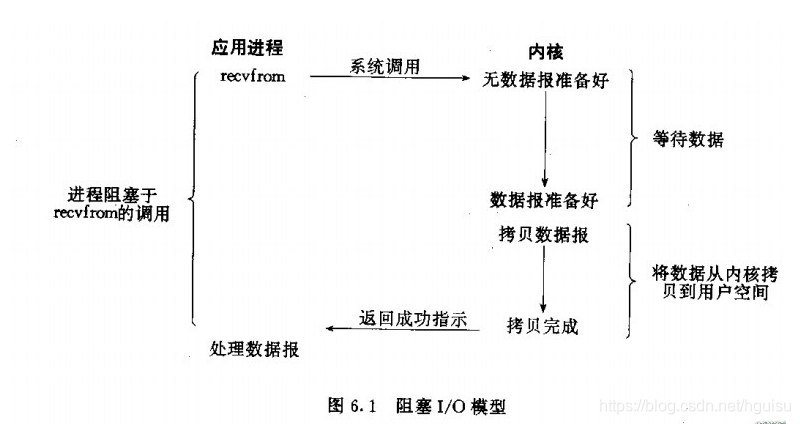
实现非常的 简单,但是存在一个问题,阻塞导致线程无法执行其他任何计算,如果是在网络编程背景下,需要使用多线程提高处理并发的能力。
注意,不要用 Android中的 点击屏幕等硬件被触发事件 去对应这里的 网络并发,这是两码事。
如果采用了 多进程 或者 多线程 实现 并发应答,模型如下:
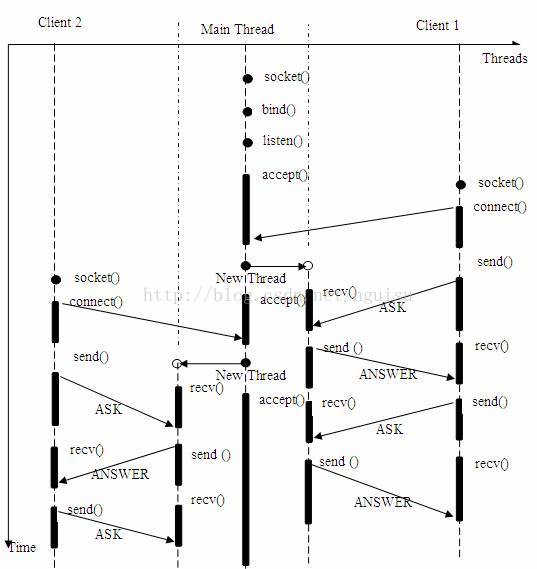
到这里,我们看的都是 I/O 阻塞 模型。
脑暴,阻塞为调用方法后一直在等待返回值,线程内执行的内容就像
卡顿在这里。
如果要消除这种卡顿,那就不能调用方法等待I/O结果,而是要 立即返回 !
举个例子:
- 去西装店定制西装,确定好款式和尺寸后,你坐在店里一直等着,等到做好了拿给你,这就是阻塞型的,这能等死你;
- 去西装店定制西装,确定好款式和尺寸后,店员告诉你别干等着,好多天呢,等你有空了来看看,这就是非阻塞型的。
改变为非阻塞模型后,应答模型如下:
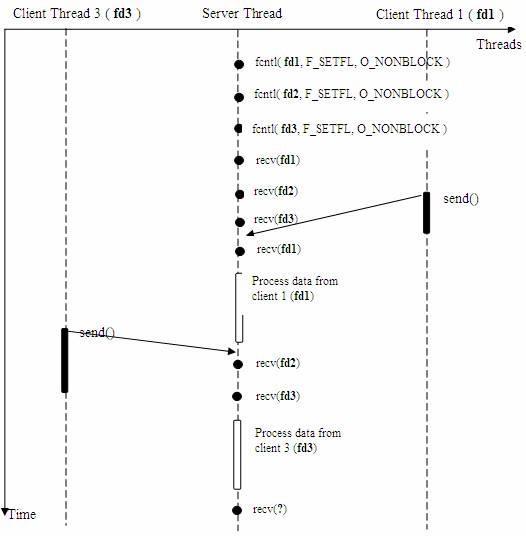
不难理解,这种方式需要顾客去 轮询 。对客户不友好,但是对店家可是一点损失都没有,还让等候区没那么挤了。
有些西装店进行了改革,对客户更加友好了:
去西装店定制西装,确定好款式和尺寸后,留下联系方式,等西服做好了联系客户,让他来取。
这就变成了 select or poll 模型:
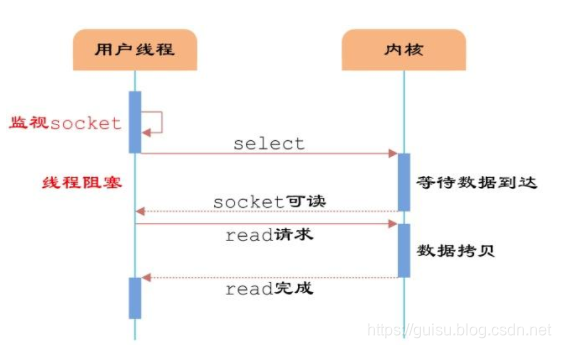
注意:进行改革的西装店需要增加一个员工,图中标识的用户线程,他的工作是:
- 在前台记录客户订单和联系方式
- 拿记录着
订单的小本子去找制作间,不断检查订单是否完工,完工的就可以提走并联系客户了。
而且,他去看订单完工时,无法在前台记录客户信息,这意味他 阻塞 了,其他工作只能先搁置着。
这个做法,对于制作间而言,和 非阻塞模型 并没有多大区别。还增加了一个店员,但是,用 一个店员 就解决了之前 很多店员 都会跑去 制作间 帮客户问"订单好了没有?" 的问题。
值得一提的是,为了提高服务质量,这个员工每次去制作间询问一个订单时,都需要记录一些信息:
- 订单完成度询问时,是否被应答;
- 应答有没有说谎;等
有些店对每种不同的考核项均准备了记录册,这和
select模型类似有些店只用一本记录册,但是册子上可以利用表格记录各种考核项,这和
poll模型类似
select 模型 和 poll 模型的近似度比较高。
没多久,老板就发现了,这个店员的工作效率有点低下,他每次都要拿着一本订单簿,去把订单都问一遍,倒不是员工不勤快,是这个模式有点问题。
于是老板又进行了改革:
- 在
前台和制作间之间加一个送信管道。 - 制作间有进度需要汇报了,就送一份信到前台,信上写着订单号。
- 前台员工直接去问对应的订单。
这就变成了 epoll模型解决了 select/poll 模型的遍历效率问题。
这样改革后,前台员工就不再需要按着订单簿从上到下挨个问了。提高了效率,前台员工只要无事发生,就可以优雅的划水了。
我们看一下NativeLooper的构造函数:
Looper::Looper(bool allowNonCallbacks) :
        mAllowNonCallbacks(allowNonCallbacks), mSendingMessage(false),
        mResponseIndex(0), mNextMessageUptime(LLONG_MAX) {
    int wakeFds[2];
    int result = pipe(wakeFds);
    LOG_ALWAYS_FATAL_IF(result != 0, "Could not create wake pipe.  errno=%d", errno);

    mWakeReadPipeFd = wakeFds[0];
    mWakeWritePipeFd = wakeFds[1];

    result = fcntl(mWakeReadPipeFd, F_SETFL, O_NONBLOCK);
    LOG_ALWAYS_FATAL_IF(result != 0, "Could not make wake read pipe non-blocking.  errno=%d",
            errno);

    result = fcntl(mWakeWritePipeFd, F_SETFL, O_NONBLOCK);
    LOG_ALWAYS_FATAL_IF(result != 0, "Could not make wake write pipe non-blocking.  errno=%d",
            errno);

    // Allocate the epoll instance and register the wake pipe.
    mEpollFd = epoll_create(EPOLL_SIZE_HINT);
    LOG_ALWAYS_FATAL_IF(mEpollFd < 0, "Could not create epoll instance.  errno=%d", errno);

    struct epoll_event eventItem;
    memset(& eventItem, 0, sizeof(epoll_event)); // zero out unused members of data field union
    eventItem.events = EPOLLIN;
    eventItem.data.fd = mWakeReadPipeFd;
    result = epoll_ctl(mEpollFd, EPOLL_CTL_ADD, mWakeReadPipeFd, & eventItem);
    LOG_ALWAYS_FATAL_IF(result != 0, "Could not add wake read pipe to epoll instance.  errno=%d",
            errno);
}
总结
相信看到这里,大家已经自己悟透了各种问题。按照惯例,还是要总结下,因为 这篇是脑暴,所以 思绪 是比较 跳跃 的,内容前后关系不太明显。
我们结合一个问题来点明内容前后关系。
Java层 Looper和MQ 会什么使用了死循环但是
不会"阻塞"UI线程/没造成ANR/依旧可以响应点击事件
- Android是基于
事件驱动的,并建立了完善的消息机制 - Java层的消息机制只是一个局部,其负责的就是面向消息队列,处理
消息队列管理,消息分发,消息处理 - Looper的死循环保障了
消息队列的消息分发一直处于有效运行中,不循环就停止了分发。 - MessageQueue的
死循环保障了Looper可以获取有效的消息,保障了Looper只要有消息,就一直运行,发现有效消息,就跳出了死循环。 - 而且Java层MessageQueue在 next() 方法中的死循环中,通过JNI调用了 Native层MQ的
pollOnce,驱动了Native层去处理Native层消息 - 值得一提的是,UI线程处理的事情也都是基于消息的,无论是更新UI还是响应点击事件等。
所以,正是Looper 进行loop()之后的死循环,保障了UI线程的各项工作正常执行。
再说的ANR,这是Android 确认主线程 消息机制 正常 且 健康 运转的一种检测机制。
因为主线程Looper需要利用 消息机制 驱动UI渲染和交互事件处理, 如果某个消息的执行,或者其衍生出的业务,在主线程占用了大量的时间,导致主线程长期阻塞,会影响用户体验。
所以ANR检测采用了一种 埋定时炸弹 的机制,必须依靠Looper的高效运转来消除之前装的定时炸弹。而这种定时炸弹比较有意思,被发现了才会炸。
在说到 响应点击事件,类似的事件总是从硬件出发的,在到内核,再进程间通信到用户空间,这些事件以消息的形式存在于Native层,经过处理后,表现出:
ViewRootImpl收到了InputManager的输入,并进行了事件处理
这里我们借用一张图总结整个消息机制流程:

08.android_os_MessageQueue
- android_os_MessageQueue代码如下所示
/*
 * Copyright (C) 2010 The Android Open Source Project
 *
 * Licensed under the Apache License, Version 2.0 (the "License");
 * you may not use this file except in compliance with the License.
 * You may obtain a copy of the License at
 *
 *      http://www.apache.org/licenses/LICENSE-2.0
 *
 * Unless required by applicable law or agreed to in writing, software
 * distributed under the License is distributed on an "AS IS" BASIS,
 * WITHOUT WARRANTIES OR CONDITIONS OF ANY KIND, either express or implied.
 * See the License for the specific language governing permissions and
 * limitations under the License.
 */

#define LOG_TAG "MessageQueue-JNI"

#include <nativehelper/JNIHelp.h>
#include <android_runtime/AndroidRuntime.h>

#include <utils/Looper.h>
#include <utils/Log.h>
#include "android_os_MessageQueue.h"

#include "core_jni_helpers.h"

namespace android {

static struct {
    jfieldID mPtr;   // native object attached to the DVM MessageQueue
    jmethodID dispatchEvents;
} gMessageQueueClassInfo;

// Must be kept in sync with the constants in Looper.FileDescriptorCallback
static const int CALLBACK_EVENT_INPUT = 1 << 0;
static const int CALLBACK_EVENT_OUTPUT = 1 << 1;
static const int CALLBACK_EVENT_ERROR = 1 << 2;


class NativeMessageQueue : public MessageQueue, public LooperCallback {
public:
    NativeMessageQueue();
    virtual ~NativeMessageQueue();

    virtual void raiseException(JNIEnv* env, const char* msg, jthrowable exceptionObj);

    void pollOnce(JNIEnv* env, jobject obj, int timeoutMillis);
    void wake();
    void setFileDescriptorEvents(int fd, int events);

    virtual int handleEvent(int fd, int events, void* data);

private:
    JNIEnv* mPollEnv;
    jobject mPollObj;
    jthrowable mExceptionObj;
};


MessageQueue::MessageQueue() {
}

MessageQueue::~MessageQueue() {
}

bool MessageQueue::raiseAndClearException(JNIEnv* env, const char* msg) {
    if (env->ExceptionCheck()) {
        jthrowable exceptionObj = env->ExceptionOccurred();
        env->ExceptionClear();
        raiseException(env, msg, exceptionObj);
        env->DeleteLocalRef(exceptionObj);
        return true;
    }
    return false;
}

NativeMessageQueue::NativeMessageQueue() :
        mPollEnv(NULL), mPollObj(NULL), mExceptionObj(NULL) {
    mLooper = Looper::getForThread();
    if (mLooper == NULL) {
        mLooper = new Looper(false);
        Looper::setForThread(mLooper);
    }
}

NativeMessageQueue::~NativeMessageQueue() {
}

void NativeMessageQueue::raiseException(JNIEnv* env, const char* msg, jthrowable exceptionObj) {
    if (exceptionObj) {
        if (mPollEnv == env) {
            if (mExceptionObj) {
                env->DeleteLocalRef(mExceptionObj);
            }
            mExceptionObj = jthrowable(env->NewLocalRef(exceptionObj));
            ALOGE("Exception in MessageQueue callback: %s", msg);
            jniLogException(env, ANDROID_LOG_ERROR, LOG_TAG, exceptionObj);
        } else {
            ALOGE("Exception: %s", msg);
            jniLogException(env, ANDROID_LOG_ERROR, LOG_TAG, exceptionObj);
            LOG_ALWAYS_FATAL("raiseException() was called when not in a callback, exiting.");
        }
    }
}

void NativeMessageQueue::pollOnce(JNIEnv* env, jobject pollObj, int timeoutMillis) {
    mPollEnv = env;
    mPollObj = pollObj;
    mLooper->pollOnce(timeoutMillis);
    mPollObj = NULL;
    mPollEnv = NULL;

    if (mExceptionObj) {
        env->Throw(mExceptionObj);
        env->DeleteLocalRef(mExceptionObj);
        mExceptionObj = NULL;
    }
}

void NativeMessageQueue::wake() {
    mLooper->wake();
}

void NativeMessageQueue::setFileDescriptorEvents(int fd, int events) {
    if (events) {
        int looperEvents = 0;
        if (events & CALLBACK_EVENT_INPUT) {
            looperEvents |= Looper::EVENT_INPUT;
        }
        if (events & CALLBACK_EVENT_OUTPUT) {
            looperEvents |= Looper::EVENT_OUTPUT;
        }
        mLooper->addFd(fd, Looper::POLL_CALLBACK, looperEvents, this,
                reinterpret_cast<void*>(events));
    } else {
        mLooper->removeFd(fd);
    }
}

int NativeMessageQueue::handleEvent(int fd, int looperEvents, void* data) {
    int events = 0;
    if (looperEvents & Looper::EVENT_INPUT) {
        events |= CALLBACK_EVENT_INPUT;
    }
    if (looperEvents & Looper::EVENT_OUTPUT) {
        events |= CALLBACK_EVENT_OUTPUT;
    }
    if (looperEvents & (Looper::EVENT_ERROR | Looper::EVENT_HANGUP | Looper::EVENT_INVALID)) {
        events |= CALLBACK_EVENT_ERROR;
    }
    int oldWatchedEvents = reinterpret_cast<intptr_t>(data);
    int newWatchedEvents = mPollEnv->CallIntMethod(mPollObj,
            gMessageQueueClassInfo.dispatchEvents, fd, events);
    if (!newWatchedEvents) {
        return 0; // unregister the fd
    }
    if (newWatchedEvents != oldWatchedEvents) {
        setFileDescriptorEvents(fd, newWatchedEvents);
    }
    return 1;
}


// ----------------------------------------------------------------------------

sp<MessageQueue> android_os_MessageQueue_getMessageQueue(JNIEnv* env, jobject messageQueueObj) {
    jlong ptr = env->GetLongField(messageQueueObj, gMessageQueueClassInfo.mPtr);
    return reinterpret_cast<NativeMessageQueue*>(ptr);
}

static jlong android_os_MessageQueue_nativeInit(JNIEnv* env, jclass clazz) {
    NativeMessageQueue* nativeMessageQueue = new NativeMessageQueue();
    if (!nativeMessageQueue) {
        jniThrowRuntimeException(env, "Unable to allocate native queue");
        return 0;
    }

    nativeMessageQueue->incStrong(env);
    return reinterpret_cast<jlong>(nativeMessageQueue);
}

static void android_os_MessageQueue_nativeDestroy(JNIEnv* env, jclass clazz, jlong ptr) {
    NativeMessageQueue* nativeMessageQueue = reinterpret_cast<NativeMessageQueue*>(ptr);
    nativeMessageQueue->decStrong(env);
}

static void android_os_MessageQueue_nativePollOnce(JNIEnv* env, jobject obj,
        jlong ptr, jint timeoutMillis) {
    NativeMessageQueue* nativeMessageQueue = reinterpret_cast<NativeMessageQueue*>(ptr);
    nativeMessageQueue->pollOnce(env, obj, timeoutMillis);
}

static void android_os_MessageQueue_nativeWake(JNIEnv* env, jclass clazz, jlong ptr) {
    NativeMessageQueue* nativeMessageQueue = reinterpret_cast<NativeMessageQueue*>(ptr);
    nativeMessageQueue->wake();
}

static jboolean android_os_MessageQueue_nativeIsPolling(JNIEnv* env, jclass clazz, jlong ptr) {
    NativeMessageQueue* nativeMessageQueue = reinterpret_cast<NativeMessageQueue*>(ptr);
    return nativeMessageQueue->getLooper()->isPolling();
}

static void android_os_MessageQueue_nativeSetFileDescriptorEvents(JNIEnv* env, jclass clazz,
        jlong ptr, jint fd, jint events) {
    NativeMessageQueue* nativeMessageQueue = reinterpret_cast<NativeMessageQueue*>(ptr);
    nativeMessageQueue->setFileDescriptorEvents(fd, events);
}

// ----------------------------------------------------------------------------

static const JNINativeMethod gMessageQueueMethods[] = {
    /* name, signature, funcPtr */
    { "nativeInit", "()J", (void*)android_os_MessageQueue_nativeInit },
    { "nativeDestroy", "(J)V", (void*)android_os_MessageQueue_nativeDestroy },
    { "nativePollOnce", "(JI)V", (void*)android_os_MessageQueue_nativePollOnce },
    { "nativeWake", "(J)V", (void*)android_os_MessageQueue_nativeWake },
    { "nativeIsPolling", "(J)Z", (void*)android_os_MessageQueue_nativeIsPolling },
    { "nativeSetFileDescriptorEvents", "(JII)V",
            (void*)android_os_MessageQueue_nativeSetFileDescriptorEvents },
};

int register_android_os_MessageQueue(JNIEnv* env) {
    int res = RegisterMethodsOrDie(env, "android/os/MessageQueue", gMessageQueueMethods,
                                   NELEM(gMessageQueueMethods));

    jclass clazz = FindClassOrDie(env, "android/os/MessageQueue");
    gMessageQueueClassInfo.mPtr = GetFieldIDOrDie(env, clazz, "mPtr", "J");
    gMessageQueueClassInfo.dispatchEvents = GetMethodIDOrDie(env, clazz,
            "dispatchEvents", "(II)I");

    return res;
}

} // namespace android